



The 21 Minutes That Decide a Cyber Incident
The Modern SOC Crisis
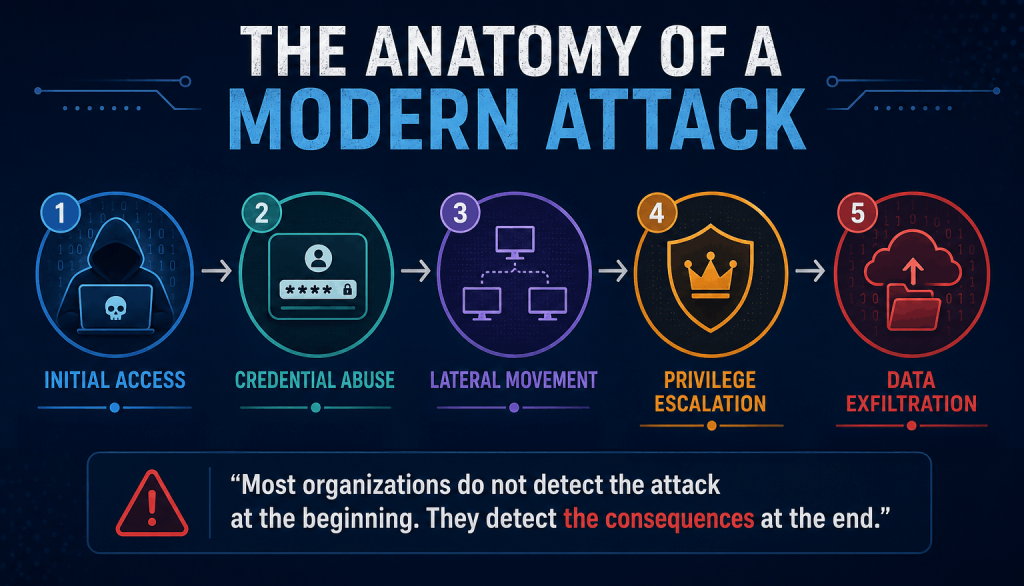
Cybersecurity has entered an era where attackers no longer need dramatic breaches to compromise an enterprise. Modern attacks move quietly, blend into legitimate activity, abuse trusted identities, and often remain undetected until operational damage has already begun.
The modern Security Operations Center is under pressure unlike ever before. Enterprises are managing cloud environments, hybrid workforces, identity-driven access, third-party integrations, SaaS applications, APIs, and AI-enabled systems simultaneously. Every one of these environments generates logs, telemetry, alerts, and behavioral signals.
The problem is not visibility alone. The problem is speed.
According to Microsoft, more than 600 million identity attacks occur every single day. At the same time, incident breakout windows continue shrinking. Security teams that once had hours to investigate suspicious activity now sometimes have only minutes before attackers move laterally, escalate privileges, or exfiltrate data.
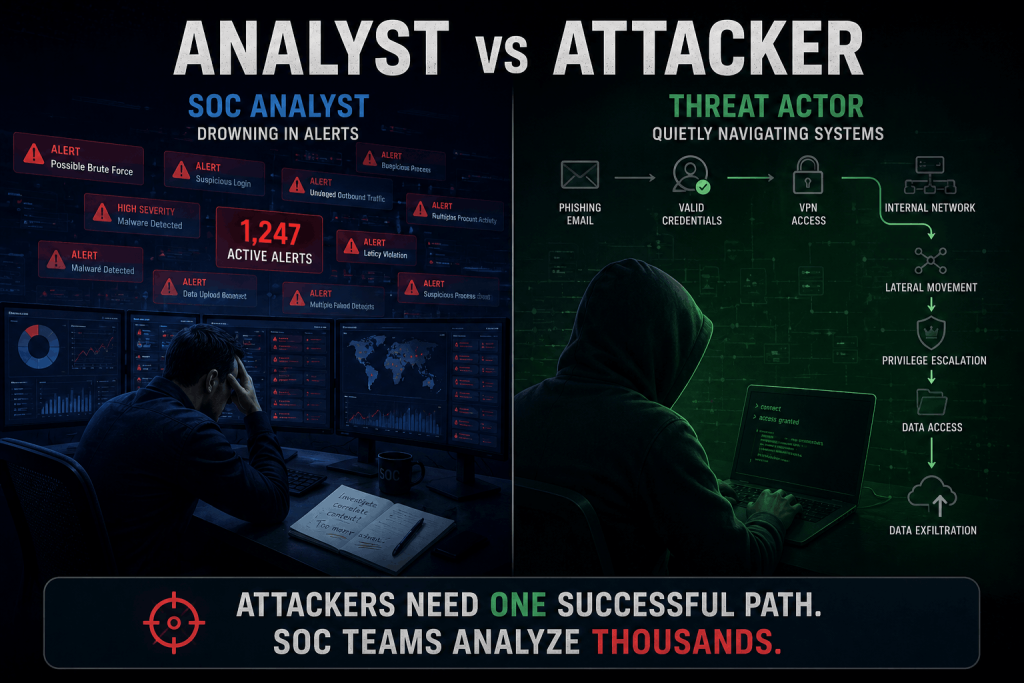
Most organizations are not struggling because they lack cybersecurity tools. They are struggling because they lack operational clarity. Analysts face alert fatigue, disconnected telemetry, fragmented visibility, and growing investigation pressure. Thousands of signals enter the SOC daily, yet only a fraction are truly actionable.
This is why the modern SOC is evolving beyond simple alert monitoring. Enterprises now require continuous monitoring, intelligent context enrichment, automated investigation workflows, and cyber resilience operations capable of reducing decision latency.
Modern cybersecurity is no longer only about preventing attacks. It is about identifying threats faster than attackers can operationalize them.
Why Traditional SOC Models Are Breaking
Traditional SOC environments were designed for a slower cybersecurity landscape. Legacy detection strategies focused heavily on perimeter security, isolated monitoring tools, and manually driven investigations. Unfortunately, modern attackers have evolved far beyond those assumptions.
Today’s threat actors exploit cloud identities, browser sessions, API vulnerabilities, unmanaged endpoints, and legitimate administrative tools. Many attacks intentionally avoid triggering traditional signature-based detection mechanisms.
At the same time, organizations have dramatically expanded their digital footprint. Remote work, multi-cloud infrastructure, SaaS adoption, and third-party integrations have created visibility fragmentation across enterprise environments.
SOC teams now face three major operational problems:
First, alert overload. Security tools generate massive volumes of notifications daily. Analysts spend significant time filtering noise rather than investigating meaningful threats.
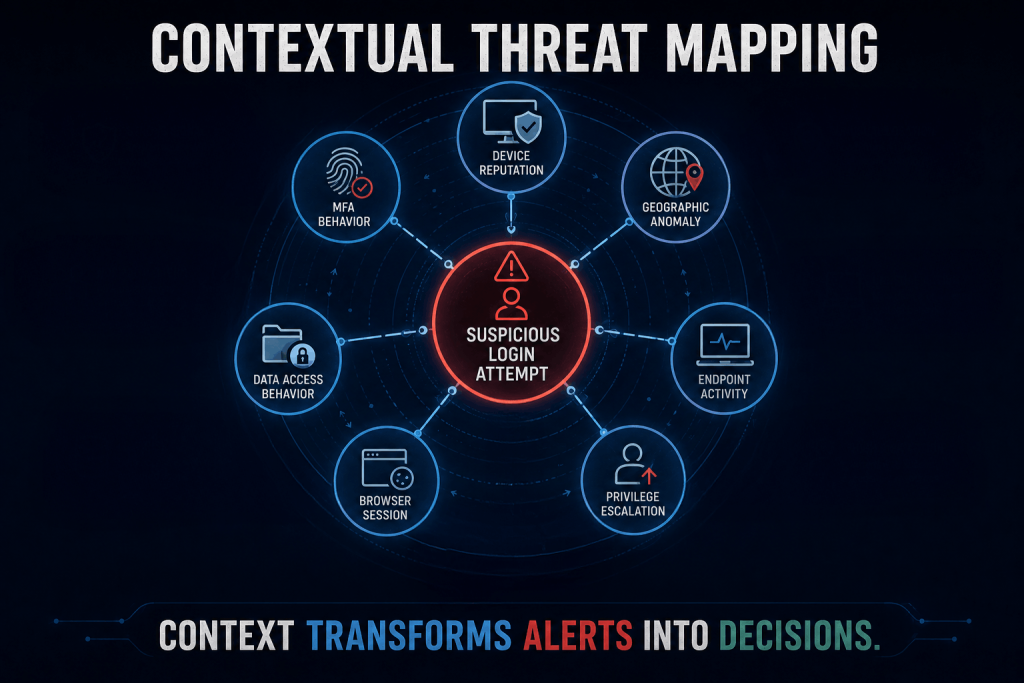
Second, lack of contextual intelligence. A suspicious login alert alone does not explain whether the device is trusted, whether privilege escalation followed, or whether the user behavior aligns with historical patterns.
Third, delayed escalation. By the time fragmented alerts are manually correlated, attackers may already have moved laterally across the environment.
This operational pressure creates what many cybersecurity leaders now describe as “security operational debt.” Every unresolved alert, delayed investigation, and disconnected signal accumulates hidden enterprise risk.
The future of SOC operations requires visibility consolidation, automated enrichment, behavioral analysis, identity-aware detection, and response orchestration. Without these capabilities, even well-funded SOC environments risk becoming reactive rather than resilient.
Step One: Continuous Monitoring Intelligence
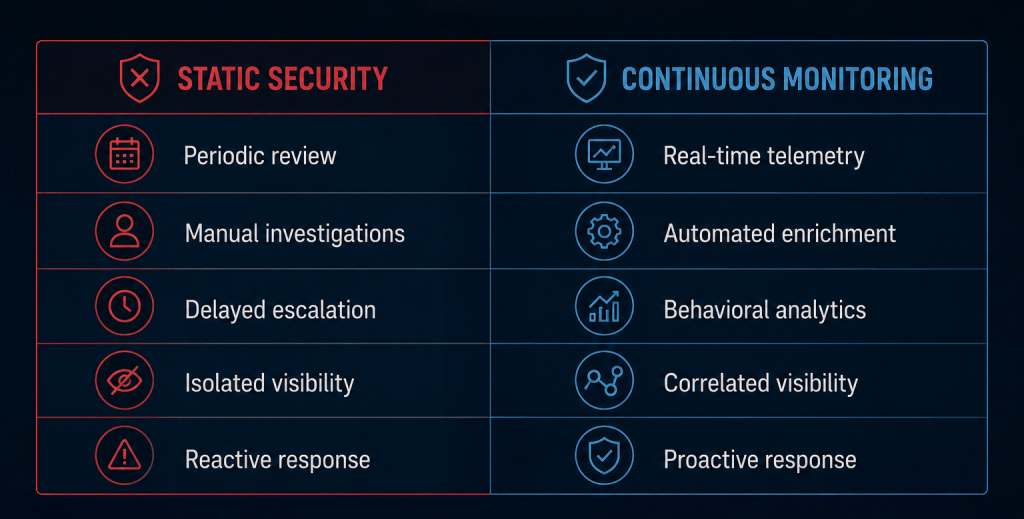
Continuous monitoring has become one of the most critical pillars of modern cyber resilience. Static monitoring approaches are no longer sufficient against rapidly evolving threats.
Attackers now rotate infrastructure constantly. Newly registered phishing domains, evolving malware variants, malicious browser extensions, and AI-assisted attack methods can appear and disappear within hours.
This means stale threat intelligence creates immediate visibility gaps.
Modern SOC environments rely heavily on continuous telemetry ingestion, threat intelligence correlation, endpoint detection, identity monitoring, and behavioral analytics. Security teams require real-time awareness of suspicious patterns across users, devices, applications, cloud environments, and network traffic.
Platforms such as Microsoft Sentinel and Microsoft Defender XDR help organizations consolidate visibility into a unified security ecosystem. Rather than analyzing isolated logs manually, analysts can correlate endpoint activity, authentication patterns, email threats, cloud signals, and user behavior within a single operational framework.
Continuous monitoring also improves detection confidence. Instead of reacting to isolated anomalies, SOC teams can identify attack progression patterns across multiple systems simultaneously.
This is especially important because modern cyberattacks increasingly rely on living-off-the-land techniques. Threat actors frequently abuse legitimate administrative tools to avoid triggering traditional detection mechanisms.
Continuous monitoring transforms cybersecurity from periodic observation into operational intelligence. Organizations gain the ability to identify suspicious behavior earlier, reduce investigation delays, and accelerate incident containment.
More importantly, continuous monitoring reduces uncertainty. In modern cybersecurity operations, reducing uncertainty quickly often determines whether an organization experiences a contained event or a major breach.
Step Two: Context Is the New Cybersecurity Currency
One of the biggest weaknesses in traditional SOC operations is the absence of context.
An alert without context creates confusion rather than clarity.
For example, a login attempt from another geography may appear suspicious initially. However, without device intelligence, user history, VPN context, endpoint activity, and privilege analysis, analysts cannot accurately determine risk severity.
This challenge contributes heavily to analyst fatigue.
Modern SOC teams are overwhelmed not simply because they receive too many alerts, but because they spend excessive time reconstructing investigative narratives manually. Analysts often jump between multiple dashboards, tools, and telemetry sources to understand a single incident.
This delays response time significantly.
Context enrichment changes that equation.
Modern SOC platforms now correlate:
- Identity behavior
- Endpoint telemetry
- User activity
- Network patterns
- Cloud signals
- Threat intelligence
- Access privilege changes
Together, these elements transform isolated signals into actionable intelligence.
Identity security has become especially important in this process. Many modern attacks no longer rely on malware alone. Instead, attackers compromise legitimate credentials, abuse weak authentication practices, exploit browser sessions, or manipulate cloud permissions.
This makes identity-aware security operations critical.
Organizations adopting modern SOC maturity models increasingly prioritize:
- User behavior analytics
- Identity threat detection
- Risk-based alert prioritization
- Contextual incident timelines
- Automated investigation summaries
The result is faster decision-making.
SOC analysts no longer spend valuable time guessing whether activity is suspicious. Instead, they receive enriched, connected visibility that improves triage accuracy and accelerates containment.
In many ways, context has become the most valuable asset inside modern cybersecurity operations. Visibility alone does not create resilience. Intelligent visibility does.
Step Three: Actionable Incident Response
Detection without action creates operational paralysis.
Modern SOC environments must not only identify suspicious activity quickly, but also enable analysts to investigate, validate, and contain threats efficiently.
This is where actionable incident response becomes critical.
Many enterprises still struggle with fragmented response workflows. Analysts manually gather evidence, build timelines, escalate incidents, and coordinate remediation steps across multiple systems.
Every delay increases attacker opportunity.
Modern SOC operations increasingly rely on SOAR platforms, automated playbooks, threat prioritization engines, and intelligent investigation workflows to reduce Mean Time to Respond (MTTR).
Automation plays a major role in accelerating containment.
For example, modern workflows can:
- Isolate compromised endpoints automatically
- Disable risky user sessions
- Trigger conditional access policies
- Escalate high-risk incidents immediately
- Generate investigation summaries
- Map indicators of compromise automatically
This reduces manual operational burden significantly.
Organizations implementing modern SOC automation strategies often report:
- Faster triage
- Lower escalation rates
- Improved analyst productivity
- Reduced investigation fatigue
- Better threat containment outcomes
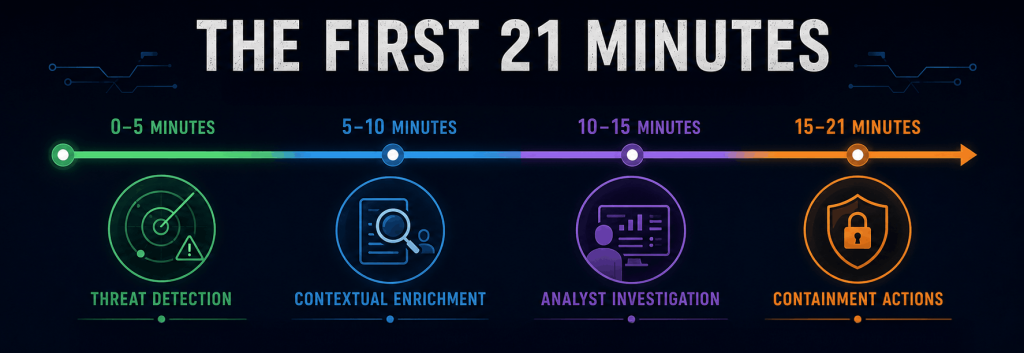
The first few minutes of an incident are often the most critical. Faster visibility and response can dramatically reduce lateral movement opportunities and minimize business impact.
Modern cybersecurity operations are therefore shifting from simple detection models toward operational resilience frameworks.
The goal is no longer only identifying attacks.
The goal is reducing the time between anomaly and action.
The Future of SOC Is Cyber Resilience
Cybersecurity is no longer only a technology conversation. It is now deeply connected to business continuity, operational resilience, customer trust, and enterprise stability.
Modern organizations require security operations capable of adapting continuously to evolving threats, cloud complexity, identity abuse, and operational disruption.
This is why the concept of cyber resilience is becoming central to enterprise security strategy.
Cyber resilience extends beyond detection. It focuses on:
- Continuous monitoring
- Rapid investigation
- Context-aware detection
- Automated containment
- Recovery readiness
- Operational continuity
Organizations that modernize their SOC capabilities gain more than visibility. They gain operational confidence.
This evolution also changes the role of cybersecurity partners. Enterprises increasingly require SOC providers that deliver:
- 24/7 monitoring
- Threat intelligence
- Identity-aware security operations
- Incident response support
- Microsoft Security expertise
- SIEM and SOAR integration
- Continuous improvement strategies
At Alliance Pro, modern cybersecurity operations are approached as a business resilience challenge rather than a reactive security exercise. By combining continuous monitoring, Microsoft Security technologies, contextual visibility, and proactive threat management, organizations can reduce operational uncertainty and strengthen long-term cyber resilience.
Because in modern cybersecurity, the organizations that respond faster often recover stronger.
CTA: Want to assess how prepared your SOC operations are against modern threats? Connect with Alliance Pro for a cybersecurity assessment focused on visibility, response readiness, and operational resilience.








Leave a Reply